


Lawns that brown out every July, watering schedules that change from one summer to the next, and clay soil that either cracks or puddles—sound familiar? That’s why so many Front Range homeowners are asking about xeriscaping in Colorado. Done well, a xeriscape is not a yard full of gravel and cactus. It’s a thoughtfully designed landscape that uses less water, needs less weekly upkeep and still looks lush, colorful and inviting from the street.
Late fall and winter are the ideal time to plan one. Plants are dormant, the ground will soon be too cold for most installs, and designing now means your project can be at the top of the list when soil warms up in spring. This guide covers what xeriscaping really means, the principles that make it work here, the mistakes we see most often and how to get your yard ready for a spring build.
What Xeriscaping in Colorado Really Means
The word “xeriscape” was actually coined by Denver Water in the early 1980s, so it’s fitting that the Front Range is where the approach matters most. The idea is simple: design a landscape around the water that nature provides, then supplement it efficiently. Xeriscaping in Colorado is about matching plants, soil and irrigation to our semi-arid climate—not eliminating plants.
A well-built xeriscape can include:
- Native and adapted perennials like penstemon, blanket flower, agastache, salvia and hardy ice plant
- Ornamental grasses that add movement and winter interest, such as blue grama and little bluestem
- Shrubs and small trees that handle wind, hail and intense UV
- A right-sized lawn area where kids or pets actually use it, using drought-tolerant turf or artificial turf
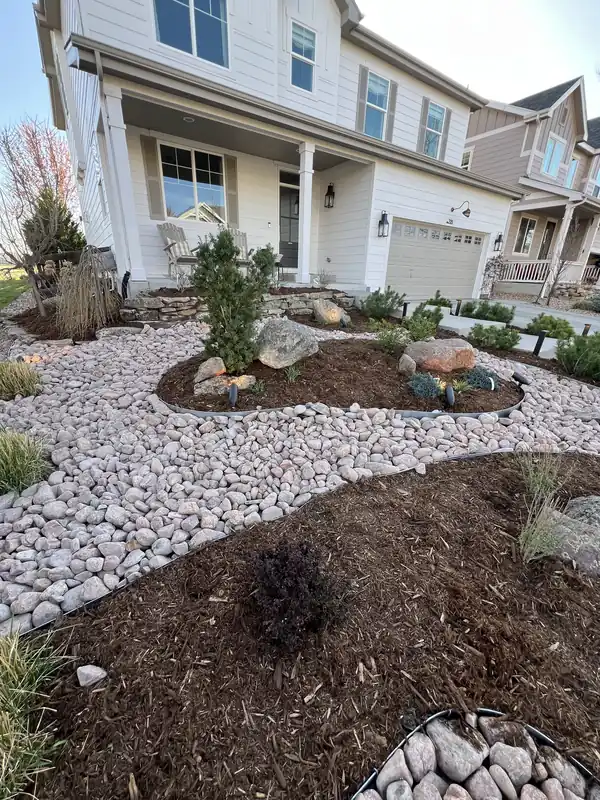
- Hardscape elements like flagstone paths, boulders, dry creek beds and patios that reduce thirsty square footage
The 7 Principles That Make a Xeriscape Work
Successful xeriscaping in Colorado follows seven time-tested principles. Skip one and the whole system struggles.
- Plan and design first. Map sun and shade, slopes, drainage paths and how your family uses each area.
- Improve the soil. Front Range clay holds water and compacts easily. Amending planting beds with compost helps roots establish without drowning.
- Limit high-water turf. Keep lawn where it serves a purpose and replace the rest with planting beds or hardscape.
- Choose the right plants. Group plants by water need (hydrozoning) so drought-lovers aren’t overwatered next to thirstier neighbors.
- Irrigate efficiently. Drip irrigation delivers water at the root zone with far less loss to wind and evaporation than spray heads.
- Use mulch. Wood mulch or rock mulch keeps soil cooler, holds moisture and suppresses weeds.
- Maintain appropriately. Xeriscapes are lower-maintenance, not no-maintenance. Seasonal pruning and weeding keep them looking intentional.
Common Xeriscaping Mistakes to Avoid
We often get called to fix xeriscapes that were installed without a plan. The most common problems include:
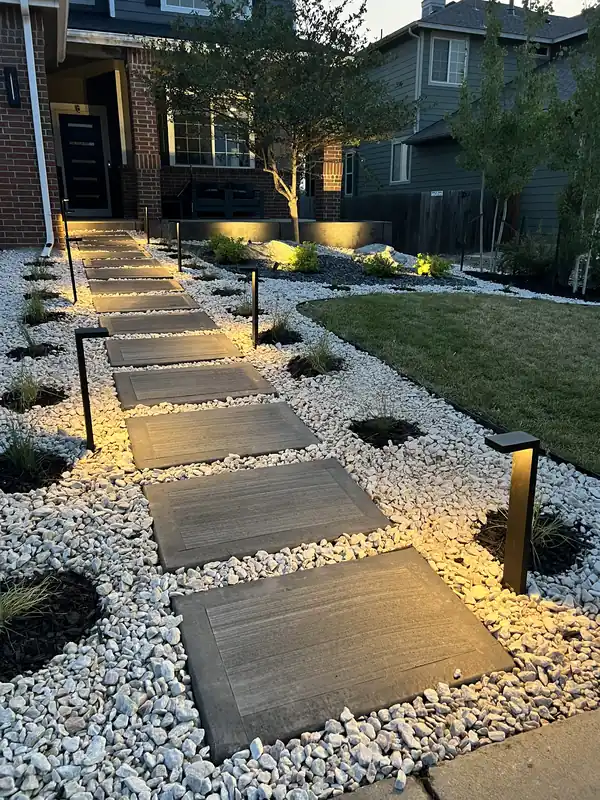
- Too much rock. Large expanses of gravel heat up in summer sun, reflect glare onto your home and can feel barren. Balance rock with plant coverage.
- Landscape fabric under everything. Fabric under organic mulch eventually traps a layer of soil and weeds on top of it. Use it selectively.
- Skipping irrigation entirely. Even native plants need regular water for their first season or two to establish deep roots.
- Ignoring drainage. Grading changes can send water toward your foundation. Every design should direct runoff away from the house.
- Forgetting HOA rules. Many Front Range HOAs have landscape guidelines. Get approval before you tear out turf.
Planning Xeriscaping in Colorado Over the Winter
Because most planting happens from spring through early fall, winter is your design window. Here’s how to use it:
- Photograph your yard now and note where snow melts first (sunny, hot zones) and where it lingers (shady, cooler zones).
- Check with your water provider and city about current turf-replacement or water-efficiency programs. Many Front Range utilities offer them, and some require pre-approval before work begins.
- Review HOA guidelines and submit your plan early, since approvals can take weeks.
- Get a design on paper. A detailed plan lets you phase the project if you’d like, starting with the front yard and finishing the back later.
If you’re weighing whether to keep any grass at all, our post on whether artificial turf is worth it in Colorado walks through how synthetic turf fits into a water-wise yard.
The Oro Advantage
Oro Landscape approaches xeriscaping in Colorado as a design project first. We use 3D design renderings so you can see plant layouts, paths and hardscape before anything is installed. Our team amends Front Range clay properly, installs zoned drip irrigation matched to each plant group, and integrates patios, boulders and dry creek beds that handle real storm runoff. The result is a landscape that looks finished in its first season and gets better every year.
Frequently Asked Questions
Is xeriscaping worth it in Colorado?
For most homeowners, yes. A properly designed xeriscape uses significantly less water, reduces weekly mowing and watering chores, and holds up better during dry summers and watering restrictions. It also adds year-round curb appeal when designed with color, texture and structure in mind.
When is the best time to xeriscape in Colorado?
Fall and winter are the best times to design, while spring through early fall is the best time to plant. Planning over the winter means your project is ready to install as soon as the soil warms.
Does xeriscaping mean no grass?
No. Xeriscaping in Colorado limits turf to areas where it’s actually used, like a play space or dog run. Many homeowners keep a smaller lawn or choose artificial turf for those spaces.
Do xeriscape plants need to be watered?
Yes, especially during their first one to two growing seasons while roots establish. After that, most native and adapted plants need only occasional deep watering, ideally through drip irrigation.
Start Planning Your Water-Wise Yard
If you’re ready to explore xeriscaping in Colorado, now is the perfect time to start the design. Learn more about our landscape and garden design services, then schedule an in-person walk-through estimate. We’ll walk your property, talk through how you use your yard and outline a plan that fits your home. Oro Landscape serves Denver, Boulder, Broomfield, Westminster, Longmont and communities across the Colorado Front Range.