


If your concrete driveway is cracked, heaving, or flaking after another Front Range winter, you have probably asked yourself the same question many Denver homeowners search every fall: is a paver driveway worth it in Colorado? It is a fair question. Your driveway is one of the largest surfaces on your property, the first thing guests see, and one of the hardest-working features of your home. It handles vehicle weight every day, hundreds of freeze-thaw cycles each year, snow plows, de-icers, hail, and intense high-altitude sun.
Fall is the ideal time to think it through. Many homeowners see winter damage coming, and planning now means a new driveway can be designed and scheduled for the best installation window. In this guide, we explain how pavers hold up in our climate, where they shine, where they need extra care, and how to decide whether they are the right fit for your home.
How Paver Driveways Handle Colorado Winters
The biggest reason pavers make sense here is flexibility. A poured concrete driveway is one rigid slab (or a few slabs separated by control joints). When water seeps underneath, freezes, and expands, or when expansive clay soil swells after a wet spring, that slab has nowhere to go, so it cracks.
An interlocking paver driveway is built from hundreds of individual units sitting on a compacted gravel base, with sand-filled joints between them. That system can move slightly with the ground and settle back without breaking. Other winter advantages include:
- Freeze-thaw resistance: Quality concrete pavers are manufactured to be denser than typical poured concrete, so they absorb less water and resist surface spalling.
- Better traction: The textured surface and joints give tires and boots more grip than a smooth slab.
- Faster melt-off on darker colors: Darker paver blends absorb sunlight, which helps snow and ice clear sooner on sunny Colorado days.
- Snowmelt-ready: Pavers can be installed over a heated snowmelt system, and individual units can be lifted later if the system ever needs service.
Where Pavers Add Real Value
Beyond durability, homeowners choose pavers because they change how the whole front of the house looks and works. When you weigh whether a paver driveway is worth it, consider these benefits:
- Curb appeal: Patterns like herringbone, borders, and color blends make a driveway look like part of the landscape design rather than a slab of gray.
- Repairability: If a section settles or a utility line needs work, pavers can be lifted and reset. With concrete, you are usually patching or replacing an entire panel, and patches rarely match.
- Design cohesion: Pavers can be matched to your walkway, front steps, or patio so the property feels connected.
- Permeable options: Permeable paver systems let rain and snowmelt soak through to a stone reservoir below, reducing runoff and puddles.
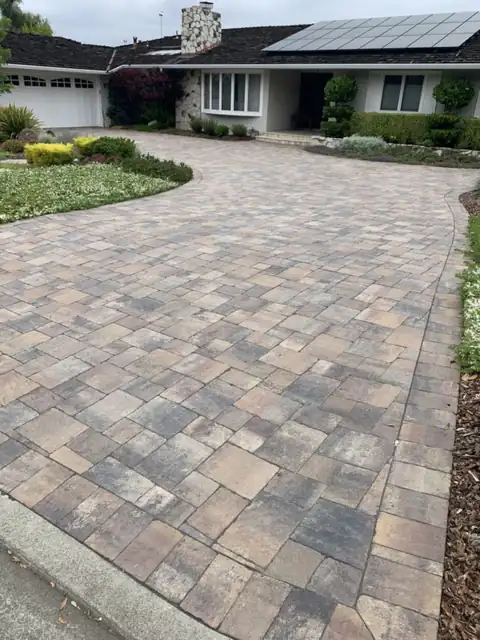
If you are still deciding between styles, our guide to choosing the right type of driveway pavers walks through concrete pavers, natural stone, clay brick, and permeable systems.
The Base Is Everything: What Makes or Breaks a Paver Driveway
Most paver driveway failures we see across Denver, Boulder, and the northern suburbs are not caused by the pavers. They are caused by what is underneath. A paver driveway carries far more weight than a patio, so the base has to be built for vehicles.
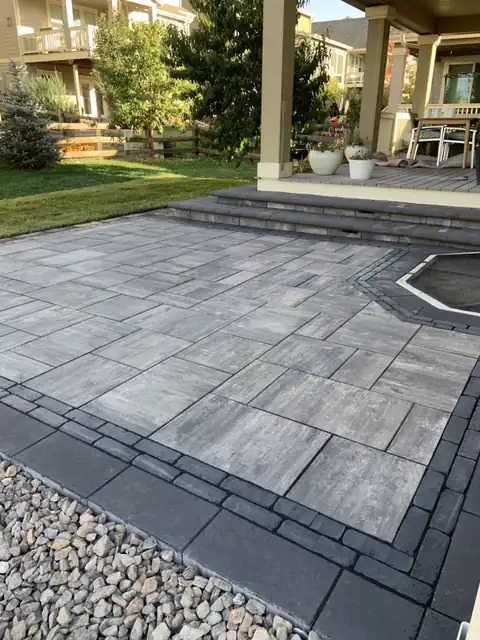
What a proper installation includes
- Deep excavation to remove topsoil and unstable clay, sized for vehicle loads rather than foot traffic.
- Compacted aggregate base installed and compacted in thin lifts, not dumped in a single layer.
- Geotextile fabric where needed to keep expansive clay from mixing into the base.
- Correct slope so water drains away from the garage and foundation instead of pooling or freezing on the surface.
- Solid edge restraint so the field of pavers cannot spread under turning tires.
- Polymeric joint sand that locks the pavers together and resists washout and weeds.
Common mistakes to avoid
- Using patio-thickness pavers or a patio-depth base for a driveway. Vehicle traffic requires a heavier-duty build.
- Skipping drainage planning on a sloped lot. Water that runs under the driveway will freeze, heave, and cause settling.
- Choosing materials only by color. Ask about freeze-thaw ratings and how a product holds up to de-icers.
- Ignoring HOA rules and city permits. Many Front Range HOAs and municipalities have requirements for driveway width, materials, or the curb cut. Confirm with your HOA and city before work begins.
How to Care for a Paver Driveway in Winter
A paver driveway is low maintenance, but a few habits protect your investment through snow season:
- Shovel or blow snow promptly so it does not compact into ice.
- Ask your snow removal provider to use a rubber or poly blade edge on pavers.
- Use de-icers sparingly and choose products your paver manufacturer recommends; avoid harsh chemicals that can damage the surface.
- Top up joint sand and consider resealing every few years to keep joints tight and colors rich.
- Watch for low spots after spring thaw and have them reset early before they spread.
The Oro Advantage
At Oro Landscape, we build driveways from the ground up for Colorado conditions. We evaluate your soil, slope, and drainage during an on-site visit, then design the excavation depth, base, and edge restraint for real vehicle loads, not just appearance. We source commercial-grade, freeze-thaw-rated pavers, and our 3D design process lets you see patterns, borders, and colors on your actual home before a single stone is set. The result is a paver driveway that looks custom and stays flat, tight, and safe winter after winter.
Frequently Asked Questions
Are paver driveways good in Colorado?
Yes. Interlocking pavers are well suited to Colorado because the individual units and joints let the surface flex slightly through freeze-thaw cycles instead of cracking like a single concrete slab. Their long-term performance depends on a properly excavated and compacted base.
Do pavers crack in cold weather?
High-quality concrete pavers are dense and rated for freeze-thaw exposure, so cracking is uncommon. When problems appear, they usually come from a weak base or poor drainage that lets water freeze underneath, not from the pavers themselves.
Can you use a snow plow on a paver driveway?
Yes, with care. A plow or snow blower with a rubber or polyurethane edge, or slightly raised skids, protects the paver surface and joints. Ask any snow removal crew to set their equipment for pavers before the first storm.
Is a paver driveway better than concrete?
It depends on your priorities. Concrete has a lower upfront investment, while pavers offer more design options, resist cracking better through freeze-thaw, and can be repaired one section at a time instead of replacing whole slabs.
Ready to See If Pavers Are Right for Your Driveway?
Every property is different, so the honest answer to whether a paver driveway is worth it depends on your soil, slope, how you use the space, and your long-term plans for the home. Explore our driveway installation services, then let our team take a look in person. We will walk your property, talk through materials and design, and give you a clear, detailed estimate with no guesswork.