


Deck or patio? It’s one of the first questions Front Range homeowners ask when they start planning a backyard upgrade, and late fall is the perfect time to settle it. Choosing between a deck or patio now gives you the winter to finalize a design, confirm HOA and permit requirements, and secure a spot on the spring build calendar. The right answer depends less on trends and more on your lot: how your yard slopes, how your back door sits above grade, how much sun the space gets, and how you actually want to use it. In Colorado, freeze-thaw cycles, expansive clay soils, intense UV and hail all put outdoor surfaces to the test, so the choice also shapes how much upkeep you’ll face for years to come. Below, we break down the real differences, the Colorado-specific factors that tip the scales, and the mistakes we see most often.
Deck or Patio: What’s the Difference?
The simplest way to think about it: a deck is built, a patio is laid.
- Deck: a raised platform framed with posts, beams and joists, finished with wood or composite boards. It can sit a few inches off the ground or a full story up.
- Patio: a surface installed at ground level on a compacted base, finished with pavers, natural stone, flagstone or concrete.
Both create outdoor living space, but they behave very differently over time. A deck relies on structural framing and fasteners; a patio relies on what’s underneath it — base depth, compaction and drainage. If you’re leaning toward a ground-level surface, our comparison of a paver vs concrete patio covers the next decision.
Which Is Better for Your Colorado Lot?
Start with your site, not the catalog. These factors usually decide the deck or patio question for us before style even enters the conversation.
Grade and door height
If your back door sits well above the yard — common with walkout basements and sloped lots in Boulder, Louisville and parts of Broomfield — a deck brings the living space up to meet the house. A patio in that situation needs stairs, a landing or retaining walls to build up the grade. On flat lots with a door near ground level, a patio is usually the more natural fit.
Sun, heat and UV
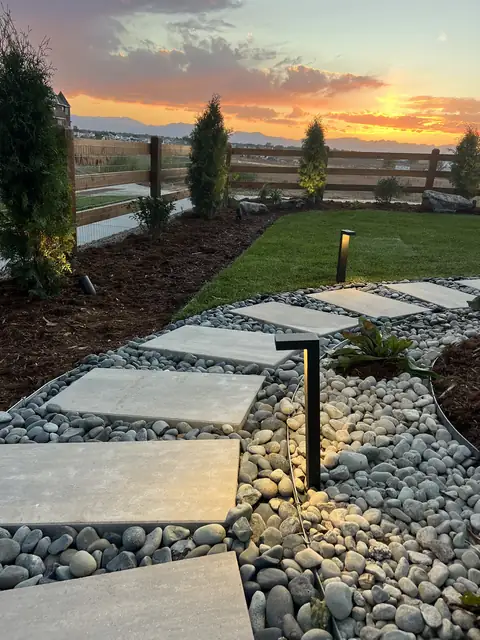
Colorado’s high-altitude sun is hard on surfaces. South- and west-facing decks can fade, check and get hot underfoot, especially darker composites. Lighter-toned pavers and natural stone handle UV exposure well and don’t need refinishing.
Soil and freeze-thaw
Expansive clay soils across the Front Range swell when wet and shrink when dry. For a patio, that means a properly excavated, compacted base and good drainage are non-negotiable. For a deck, footings must be set to the depth your local building department requires so frost doesn’t heave the posts.
How you’ll use the space
- Fire pits and outdoor kitchens pair naturally with a patio, since stone and pavers are non-combustible.
- Views and elevated dining favor a deck, especially on hillside lots.
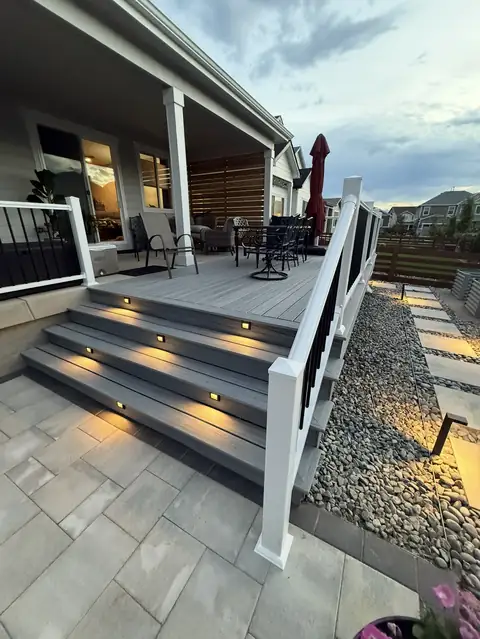
- Multi-level living often combines both: a deck off the kitchen stepping down to a patio with a fire feature.
Deck or Patio Pros and Cons
Patio strengths: long lifespan with minimal upkeep, excellent fire resistance, easy integration with seating walls, fire pits and outdoor kitchens, and individual pavers can be lifted and reset if a section ever settles.
Patio trade-offs: works best on level or gently sloped ground; building up a steep grade adds walls and fill.
Deck strengths: handles slopes and elevated doors gracefully, creates views, and provides usable space or storage underneath.
Deck trade-offs: requires periodic inspection of boards, fasteners and railings; wood needs regular sealing; and decks typically involve structural permits and inspections.
Common Mistakes to Avoid
- Undersizing the space. Lay out your furniture, grill and walkways first. A dining set needs room to pull chairs back comfortably.
- Ignoring drainage. Whether you choose a deck or patio, water must flow away from your foundation — not toward it.
- Skipping the permit check. Requirements vary by city and HOA, so confirm what applies to your address before construction begins.
- Choosing by looks alone. A dark deck board or a smooth-finish surface can look great in a showroom and perform poorly in direct Colorado sun or on icy winter mornings.
The Oro Advantage
Because Oro Landscape designs and builds both decks and patios, we don’t have a reason to push one over the other — we recommend what your lot and lifestyle actually call for. Every project starts with an on-site evaluation of grade, soil and sun exposure, and our 3D design process lets you see a deck, a patio or a combination of both on your actual home before anything is built. Our crews excavate to proper depth, compact the base in lifts, and plan drainage from day one so your outdoor space stands up to Colorado winters for the long haul.
Frequently Asked Questions
Is a deck and patio the same thing?
No. A deck is a raised, framed structure finished with wood or composite boards, while a patio is a ground-level surface of pavers, stone or concrete installed on a compacted base. Both serve as outdoor living space, but they’re built, maintained and permitted differently.
Is a deck or patio better for resale?
Buyers value well-built outdoor living space either way; what matters most is that it suits the home and is in good condition. A low-maintenance paver patio tends to age gracefully, while a deck that shows wear can become a negotiating point. Design for how you’ll use the space, and build it to last.
Should I build a deck or concrete patio?
On a level yard with a door near ground level, a patio is usually the better fit, and pavers often outperform poured concrete in freeze-thaw conditions because they flex rather than crack. On sloped lots or with an elevated door, a deck is typically the more practical choice.
Get Expert Help With Your Deck or Patio
Still weighing a deck or patio? Oro Landscape serves homeowners across Denver, Boulder, Broomfield, Longmont and the Colorado Front Range. Explore our patio installation services and our custom decks, then schedule an in-person walk-through estimate. We’ll assess your yard, talk through how you want to live outdoors, and give you a clear recommendation and quote — with plenty of time to be first in line for spring.