


The first real snowstorm on the Front Range rarely waits for homeowners to get organized. One week it is sunny and sixty degrees, the next you are digging out the driveway before work. If you are searching for what to look for in a snow removal service, you are already a step ahead, because now is the time to choose a provider and get on their route.
The right snow removal service keeps your family safe, protects the driveway, walkways, and landscaping you have invested in, and helps you stay on the right side of local sidewalk-clearing rules. The wrong one shows up late, scrapes your pavers, piles snow on your shrubs, and leaves icy steps behind. Here is how to tell the difference before the first flakes fall.
1. Snow Removal Service Triggers and Response Times
The most important question to ask any snow removal service is simple: when will you show up? A professional provider should explain, in writing:
- The snow trigger: how many inches of accumulation cause a visit to be dispatched.
- Response window: how soon after the trigger is reached the crew arrives, and whether they return during long storms.
- Priority order: whether residential clients are serviced before or after commercial accounts, and how routes are sequenced.
- Ice-only events: what happens when a light dusting or freezing drizzle creates ice but does not hit the snow trigger.
Colorado storms are unpredictable. A spring upslope storm can drop heavy, wet snow for a day and a half, while a winter clipper may leave just enough to glaze your steps. Make sure your plan covers both.
2. Know Exactly What Gets Cleared
Many disappointments come from mismatched expectations. Before you sign, confirm which areas are included:
- Driveway and apron, including the windrow the city plow leaves at the curb
- Public sidewalks in front of and beside your home
- Front walkway, porch, and steps
- Side gates, back patio, and paths to trash bins or a detached garage
- De-icing of steps and high-traffic areas
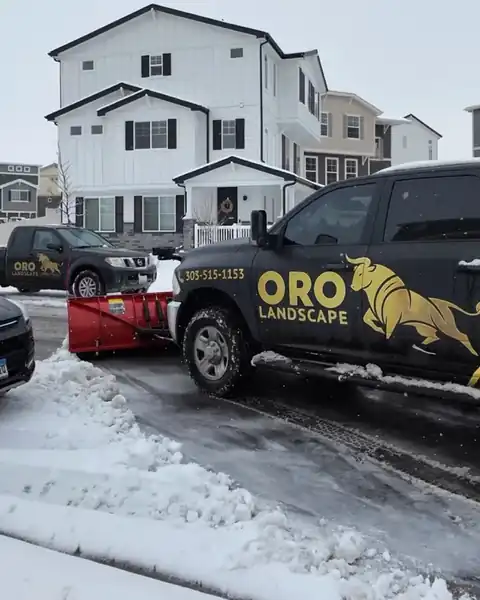
Most Front Range cities, including Denver, require residents to clear public sidewalks within a set time after snowfall stops. Check your city’s current rules and make sure your provider’s response times meet them.
3. Equipment and Methods That Protect Your Hardscape
Your driveway, pavers, and walkways are a long-term investment, and snow removal is when they are most at risk. Ask any snow removal service you are considering how its crew works on different surfaces:
- Blade edges: Rubber or polyurethane cutting edges, or properly adjusted skids, protect pavers, stamped concrete, and natural stone from chipping and scraping.
- The right equipment for each area: Truck plows clear streets, long driveways, and parking areas quickly, while snow blowers, power brooms, and shovels are the better choice near steps, edges, and landscaping.
- De-icer selection: Ask which ice melt they use and whether it is safe for your surfaces, pets, and nearby plants. Harsh salts can damage concrete, pavers, and lawn edges.
- Snow stacking plan: Snow should be piled where it will not bury shrubs, block drainage, or melt and refreeze across your driveway.
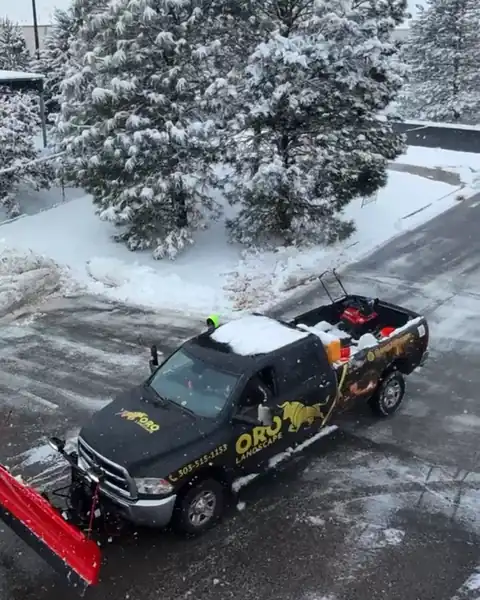
If you have a paver driveway or are considering one, our guide on choosing driveway pavers explains why the right material and base matter in a snowy climate.
4. Reliability, Insurance, and Communication
A snow removal service is only as good as its follow-through at 5 a.m. during a storm. Look for:
- Proof of insurance: General liability coverage protects you if equipment damages property or someone is injured.
- A written agreement: Service areas, triggers, de-icing, and how damage is handled should all be documented.
- Local crews and backup equipment: Ask what happens if a machine breaks down or a crew member is out mid-storm.
- Communication: Text or email updates when service is complete, and a real person to call if something is missed.
- A pre-season walk-through: Good providers visit before winter to mark sprinkler heads, landscape lighting, edging, and curbs with stakes so they are not damaged under the snow.
Common Snow Removal Service Mistakes to Avoid
- Waiting until the first storm to sign up, when the best providers are already full.
- Choosing a company that cannot explain its trigger or response time clearly.
- Allowing metal blades directly on pavers or decorative concrete.
- Forgetting to mark irrigation heads, lights, and bed edges before snow covers them.
The Oro Advantage
At Oro Landscape, snow and ice management is an extension of the care we put into building outdoor spaces. Because our team designs and installs driveways, patios, walkways, irrigation, and landscape lighting across the Denver metro area, we know exactly what lies beneath the snow and how to protect it. We walk your property before the season, mark hazards and features, use surface-appropriate equipment and de-icers, and stack snow away from plantings and drainage paths. You get a reliable snow removal service, clear communication, and a crew that treats your landscape like their own work.
Frequently Asked Questions
When should I sign up for snow removal service?
Ideally in early to mid fall, before the first significant storm. Reputable providers fill their routes early, and signing up ahead of time gives the crew a chance to walk your property and mark hazards before snow covers them.
Does snow removal include sidewalks?
It depends on the provider and the agreement. A typical snow removal service clears driveways only unless sidewalks, walkways, steps, and patios are listed in writing, so confirm exactly which surfaces are included.
What is the snow trigger for snow removal?
The trigger is the snowfall depth at which the crew is dispatched to your property. Triggers vary by provider and plan, so ask what yours is and whether light snowfalls that still create ice are covered.
Is ice melt safe for pavers and concrete?
Some de-icers are much gentler than others. Ask your provider which product they use, request one that is recommended for your paver or concrete surface, and make sure it is applied in measured amounts rather than heavy piles.
Get Ahead of the First Storm
Choosing a snow removal service in October means peace of mind in December. Learn more about our lawn care, grounds, and snow management services, then schedule a visit. We will walk your property, review the areas you want cleared, discuss surface protection, and give you a clear estimate tailored to your home.